
Last updated November 4, 2026
 Wrought iron
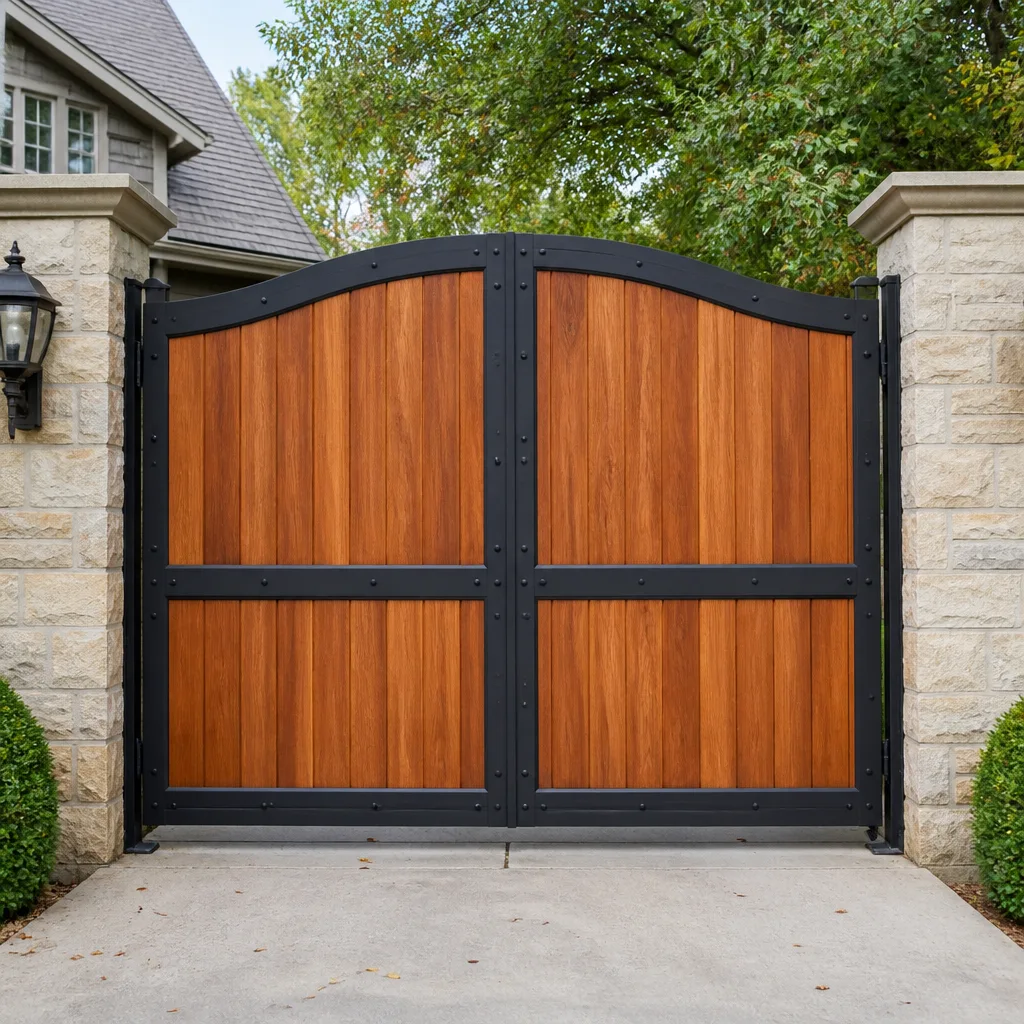 Wood & steel frame
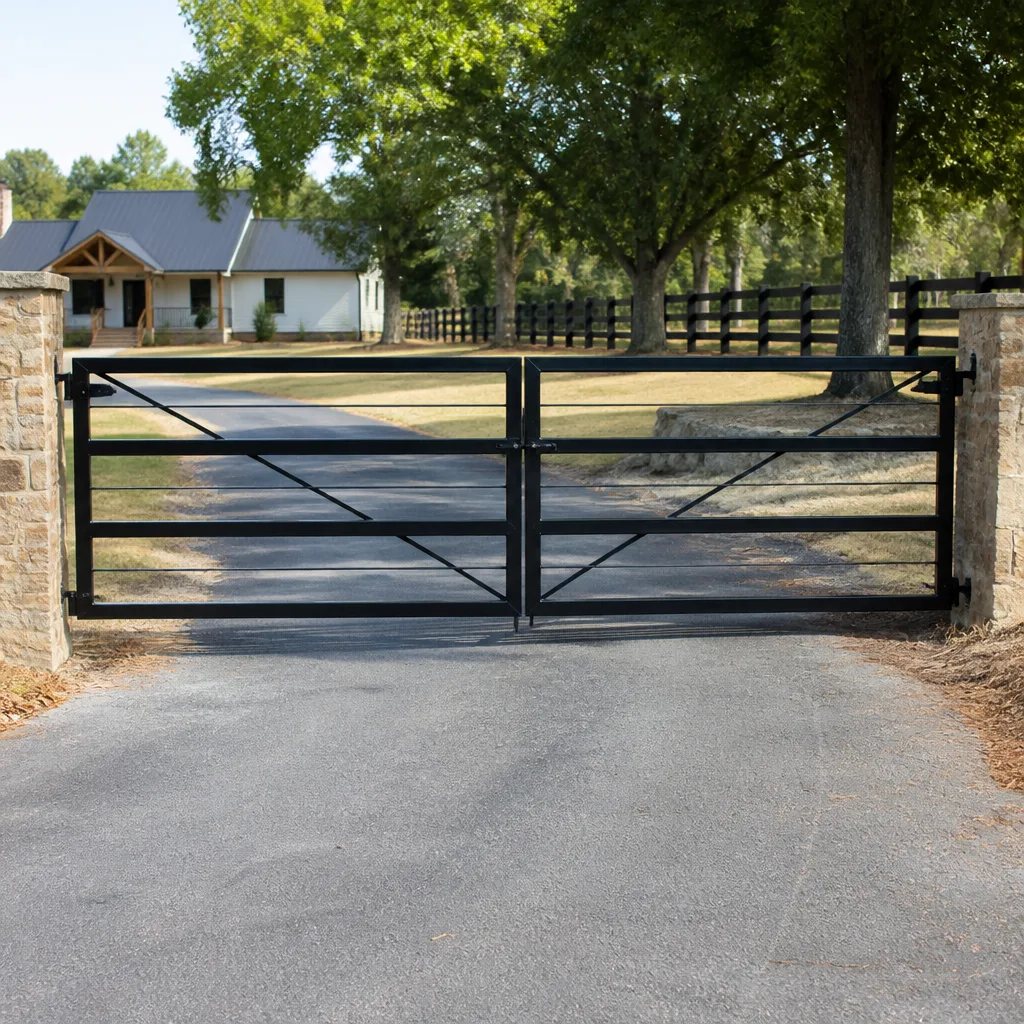 Farm & ranch
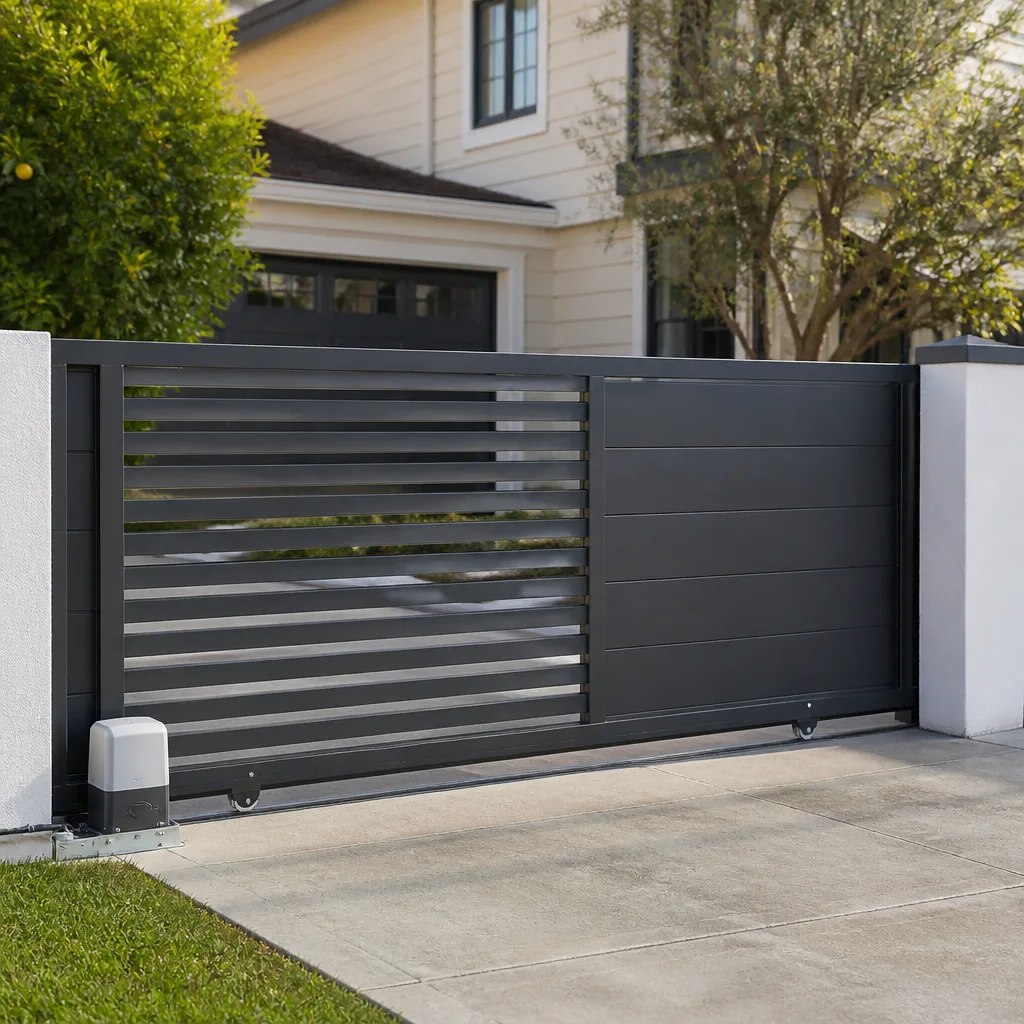 Sliding driveway gates
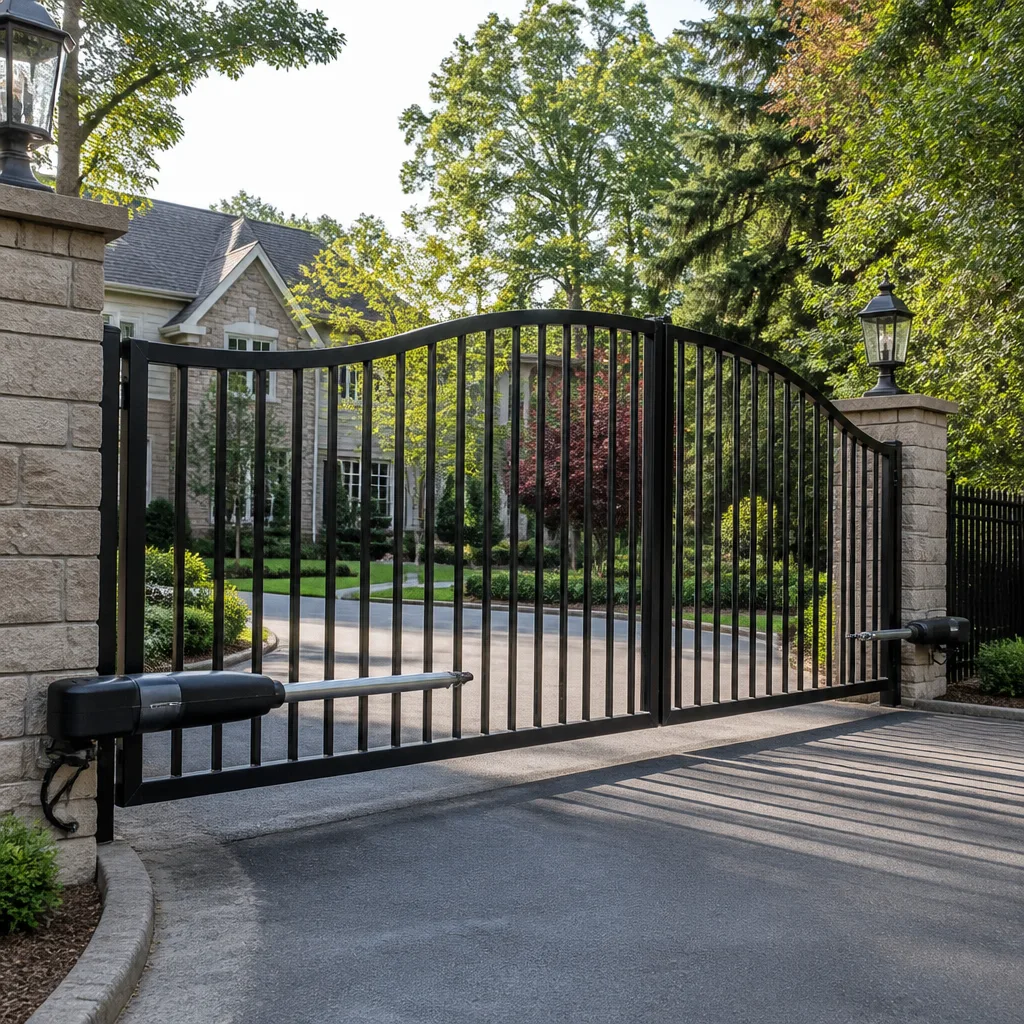 LiftMaster operators
Free on-site gate assessment - hinges, posts, and your LiftMaster or Nice gate operator checked before anything is quoted
The assessment is free and the quote is the invoice.
Get your free estimateDIY vs Professional Gate Repair: The Westminster Homeowner’s Decision Guide
Most gate problems in Westminster look simpler than they are. A sagging leaf gets blamed on a hinge when the post has shifted in the clay soil that dominates this part of Orange County. An operator that reverses gets a new battery when the force setting was never calibrated for the gate’s weight. Some of these fixes are genuinely safe to do yourself. Others create a liability you don’t want to own. We’ll give you the exact line between the two, why California code draws it where it does, and when your time is better spent calling the phone number at the bottom of this page.
Quick Answer
DIY gate repair in Westminster makes sense for mechanical tasks that don’t touch wiring or entrapment protection: cleaning sensors, lubricating hinges, replacing a wheel, reprogramming a remote. It does not make sense for anything involving the operator’s force settings, control board wiring, or safety edges, because UL 325 compliance and California contractor law put those jobs in the hands of licensed electricians and gate specialists. If the repair involves a circuit board, a motor, or the automatic reverse function, call Gate Repair Westminster before you open the panel.
Styles & brands we work with
- Wrought iron
- Wood & steel frame
- Farm & ranch
- Sliding driveway gates
- LiftMaster operators
Table of Contents
- What’s Safe for DIY: The Homeowner’s List
- What’s Not Safe: Wiring, Boards, and Force Settings
- California Code and UL 325: The Two Standards That Matter
- Tools and Skills You Actually Need for Common DIY Repairs
- How DIY Work Affects Your Warranty
- The Break-Even Point: When a DIY Mistake Costs More Than a Pro Visit
- Common Mistakes to Avoid
- When to Call a Professional
What’s Safe for DIY: The Homeowner’s List
Some gate repairs are maintenance work with extra steps. You don’t need a license, a permit, or a specialist’s diagnostic tools for these. You need a wrench, a can of the right lubricant, and about forty minutes on a Sunday morning. Westminster’s dry, mild climate means rust moves slowly on most gate hardware, but dust from the Santa Ana winds gets into everything that moves, including hinge pins and wheel bearings.
Here’s the full list of jobs we consider DIY-appropriate for a careful homeowner:
- Hinge lubrication. Use a silicone-based lubricant, not WD-40. WD-40 displaces moisture but dries out and attracts dirt. Silicone stays put. Apply it to the hinge pins, the latch mechanism, and any moving arm on the operator. Do this twice a year in Westminster’s dust season.
- Gate wheel replacement. On sliding gates, the wheels wear down over time, especially on long driveways with heavy single-leaf gates. Replacing a wheel is a bolt-off, bolt-on job that doesn’t require touching the motor or its settings. The wheel diameter and axle size matter, so take the old wheel to a supplier rather than guessing.
- Remote reprogramming. Re-syncing a remote to a receiver is a button-press sequence, not an electrical repair. DoorKing, LiftMaster, and Mighty Mule each use a different learn-button procedure, but the manual for your operator spells it out. You won’t need to open the board housing unless the receiver has failed entirely.
- Sensor cleaning. Photo eye sensors get dirty fast in Westminster because wind-blown dust coats the lenses. Wiping them with a dry microfiber cloth and checking for spider webs inside the housing solves a surprising number of “gate reverses for no reason” problems. Don’t use a wet cloth; moisture inside the lens housing causes condensation issues.
- Track clearing and alignment inspection. On a sliding gate, debris in the track causes grinding and jerky motion. Clear out leaves, gravel, and caked dirt. Check that the track hasn’t shifted sideways. Straightening an actual bent track is a professional job, but clearing it is not.
These jobs share three traits: they don’t expose live wiring, they don’t change the force or speed at which the gate operates, and they don’t require you to defeat any safety device. If the job you’re looking at meets all three tests, it’s probably DIY territory.
What’s Not Safe: Wiring, Boards, and Force Settings
Electric gates in Westminster are governed by a set of rules that don’t care how handy you are. The moment you touch the operator’s power wiring, the control board, or the settings that determine how the gate responds to an obstruction, you’ve crossed from homeowner maintenance into electrical work under California law. That work requires a licensed C-10 electrical contractor or a D28 gate contractor. No homeowner permit exists for it.
Here’s what needs a licensed specialist, every time:
- Control board replacement or repair. The board is the brain of the system. Swapping one involves low-voltage wiring, sometimes high-voltage wiring, and correct positioning of limit switches and accessory terminals. A wrong connection on a DoorKing or Elite board can blow the replacement board on first power-up.
- Motor replacement or capacitor work. The operator motor stores electrical charge even after the breaker is off. The capacitor in particular can deliver a serious shock if discharged incorrectly. This is not a handyman job.
- Force limit adjustment. This is the big one. Manufacturers set force limits at the factory, but field adjustments are common after installation settles. Set the force too high and the gate will push through an obstruction instead of reversing. That’s a UL 325 violation, and it’s the specific failure that puts a homeowner in front of a liability lawsuit when a child or pet is injured.
- Obstruction sensitivity adjustment. Same category as force limits. The gate must reverse after detecting a certain amount of resistance. Dialing this too high to overcome a sticky wheel or a sagging leaf is the classic DIY mistake that turns a maintenance problem into a safety hazard.
- Safety edge or photo eye replacement. These devices are the physical entrapment protection required by UL 325. Replacing them means wiring them into the board correctly and testing that they trigger reverse at the right threshold. A sensor that’s mounted at the wrong height or wired to the wrong terminal is worse than no sensor, because it creates false confidence.
- Any repair that involves opening the line-voltage side of the operator. The transformer and incoming power wiring carry 120 volts. This is the same category of work as installing a light fixture or replacing an outlet, and it falls under the same electrical licensing requirement.
The line we draw is simple: if the repair requires a screwdriver and the panel cover has a wiring diagram printed inside it, that panel is not for you to open. Call an electric gate repair specialist instead. In Westminster, that’s what we do, and we’d rather fix a small problem before it becomes a board replacement.
California Code and UL 325: The Two Standards That Matter
Homeowners in Westminster face two overlapping rule sets when it comes to automatic gates, and most DIY information online ignores both of them. UL 325 is a national product safety standard that applies to every automatic gate operator sold in the United States. California’s contractor licensing law is state law that determines who may legally perform certain work. They’re different things, and you need to respect both.
UL 325 is not a law passed by a legislature. It’s a safety standard written by Underwriters Laboratories, but it becomes legally binding through building codes and through the manufacturer’s installation specifications. Every operator we work with, including LiftMaster, DoorKing, Elite, and Mighty Mule, lists compliance with UL 325 as a condition of proper installation. That standard mandates specific entrapment protection: a gate must reverse when it encounters an obstruction, must have a primary and a secondary entrapment protection device, and must not exert more than the prescribed force on contact. These requirements apply to every functioning automatic gate in Westminster, not just new installs.
California’s contractor law is separate. Under Business and Professions Code section 7028, you can’t perform work that requires a contractor’s license without holding one. Electrical work, which includes the wiring and control systems of gate operators, requires a C-10 license unless the work is being done by a qualified professional under another applicable classification. Gate installation and substantial repair falls under the D28 class. The practical consequence: a homeowner may not legally perform that work on their own property beyond the minor maintenance tasks listed earlier. That’s not an interpretation; that’s the statute.
Here’s the connection California courts have drawn, in plain terms. If you adjust your own gate’s force settings to compensate for a mechanical problem instead of fixing the underlying issue, and that improper adjustment allows the gate to strike someone, you’re not facing a disputed warranty claim. You’re facing a personal injury claim that your homeowner’s insurance may refuse to defend, because the policy excludes liability arising from work performed in violation of a statute or the manufacturer’s installation requirements. We’re not lawyers, but we’ve seen the aftermath of exactly this scenario, and it’s the reason this guide exists.
Tools and Skills You Actually Need for Common DIY Repairs
We’ll give you the straight answer on tool requirements, because most YouTube tutorials show a professional with three thousand dollars of equipment in the frame while claiming the job needs “just basic tools.” That’s not true for most gate work, and it misleads homeowners in Westminster into starting jobs they can’t finish.
For the DIY-safe jobs on our list, here’s the real tool load:
- Hinge lubrication: one can of silicone lubricant, one rag. Nothing else. Five minutes.
- Wheel replacement on a sliding gate: a socket set, a block of wood or a jack to support the gate leaf, and possibly a pry bar to take the weight off the wheel. Two hours if the bolts cooperate. The skill is knowing how to support the gate so it doesn’t fall on you while the wheel is off. That’s not complicated, but it’s not optional.
- Remote reprogramming: the remote, the manual, and a paperclip or small screwdriver for the learn button on some models. Fifteen minutes. No physical risk.
- Sensor cleaning: a microfiber cloth and a dry-powder brush for the stubborn dust. No tools to speak of. Twenty minutes.
- Track clearing: a shop vacuum, a stiff brush, and a putty knife for packed dirt. An hour.
What none of these jobs require is a multimeter, a wiring diagram, or contact with an energized conductor. The moment a repair demands any of those three, the tool list transforms. You’d need a true-RMS multimeter, insulated drivers, and working knowledge of low-voltage control wiring to safely handle even a basic sensor replacement. That’s not because gate electronics are mysterious; it’s because the interaction between the sensor, the board, and the motor has to be verified under load, and that verification requires tools most homeowners don’t own and shouldn’t buy for a single repair.
Our technicians carry the diagnostic equipment for brand-specific board voltage checks and limit switch testing across DoorKing, Elite, Mighty Mule, and LiftMaster systems. When we say the job needs a specialist, it’s because we’re looking at the same panel you are and we know what’s behind it.
See the difference
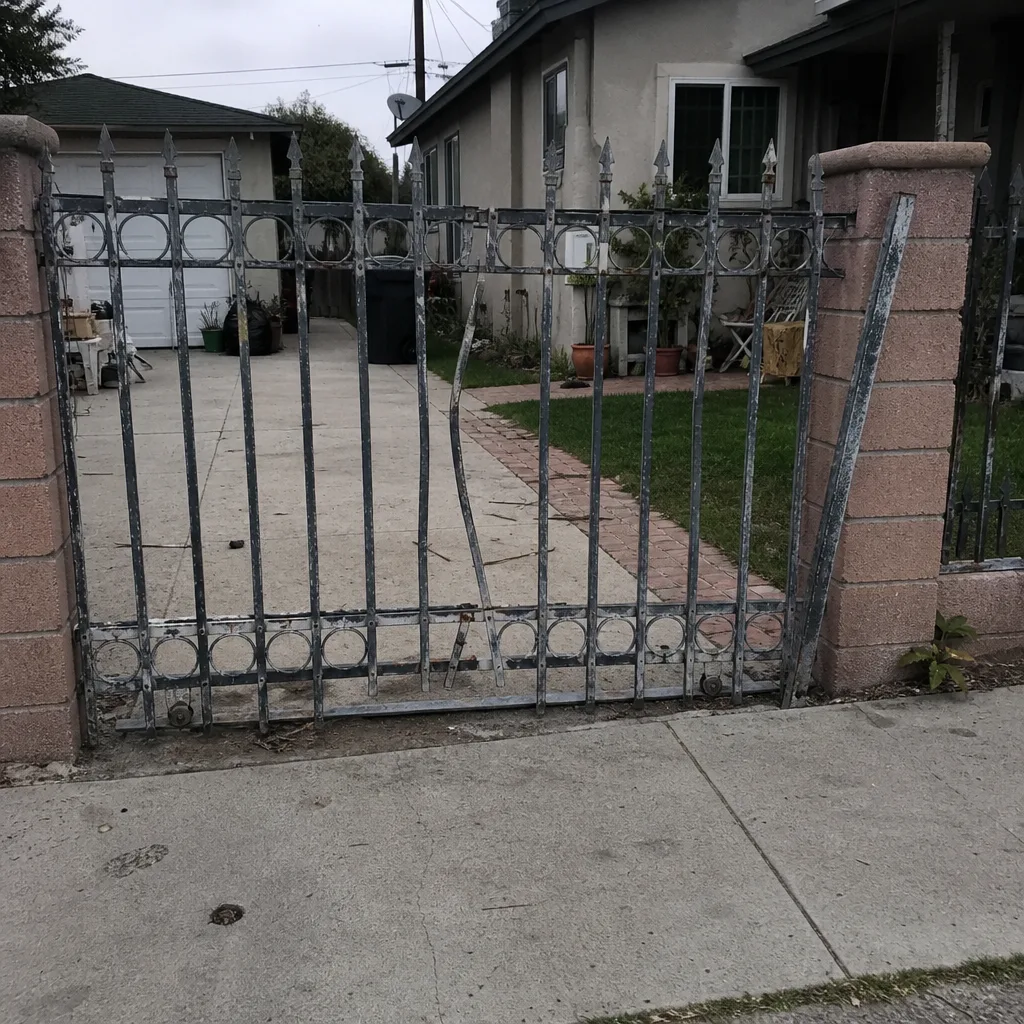 Before
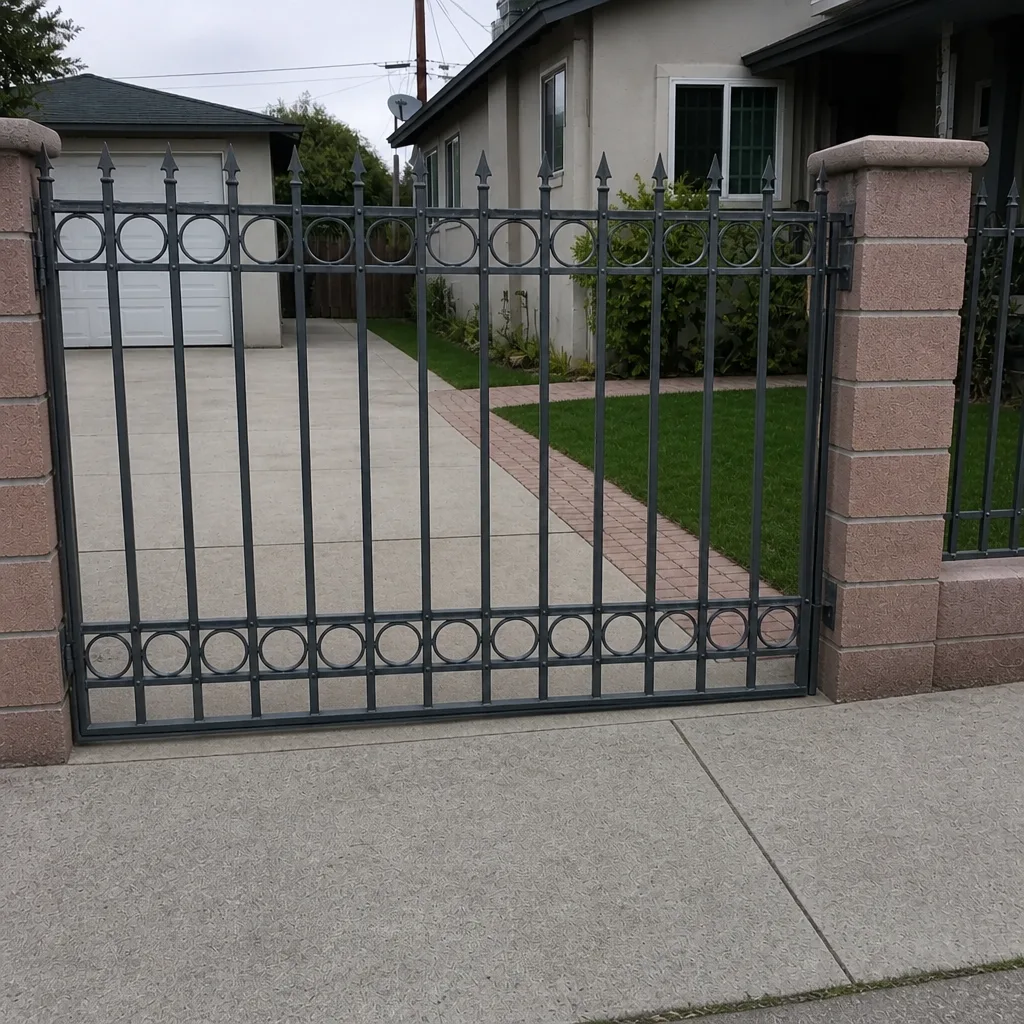 After
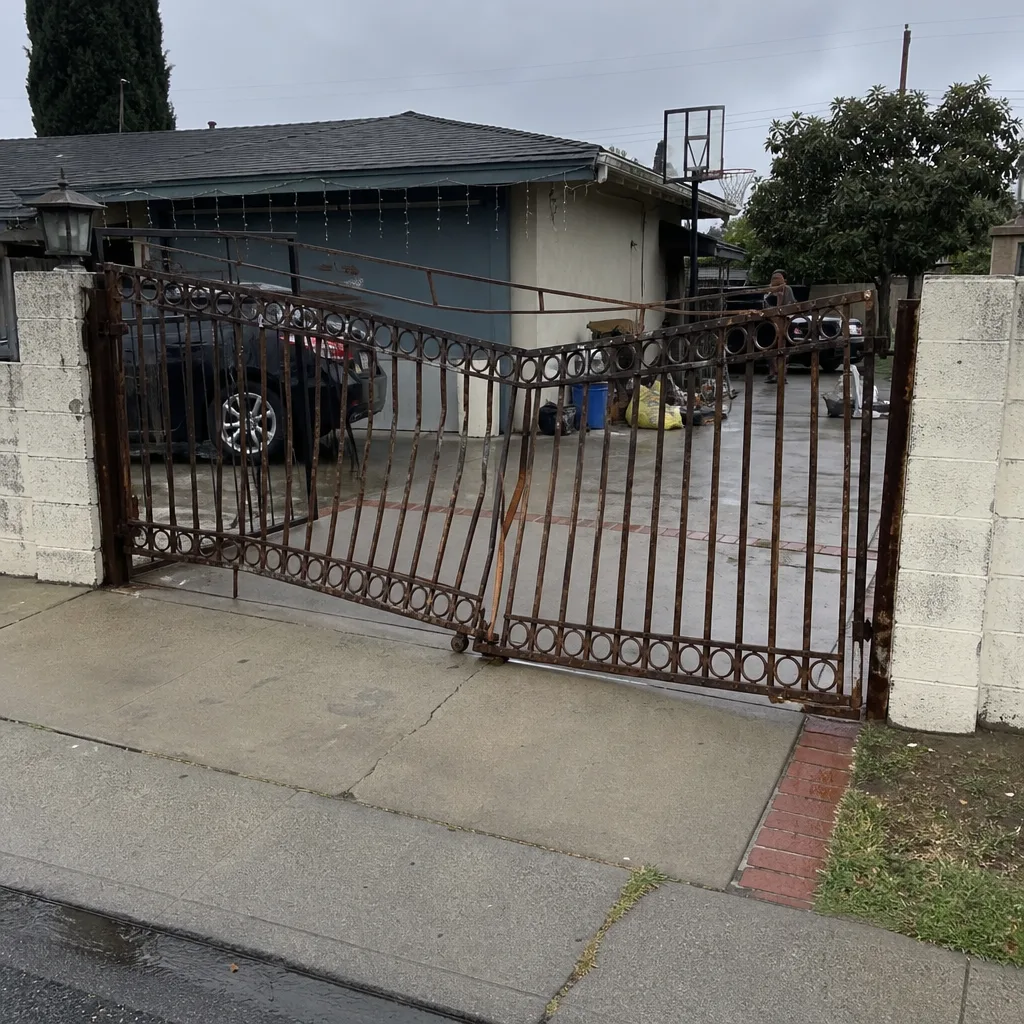 Before
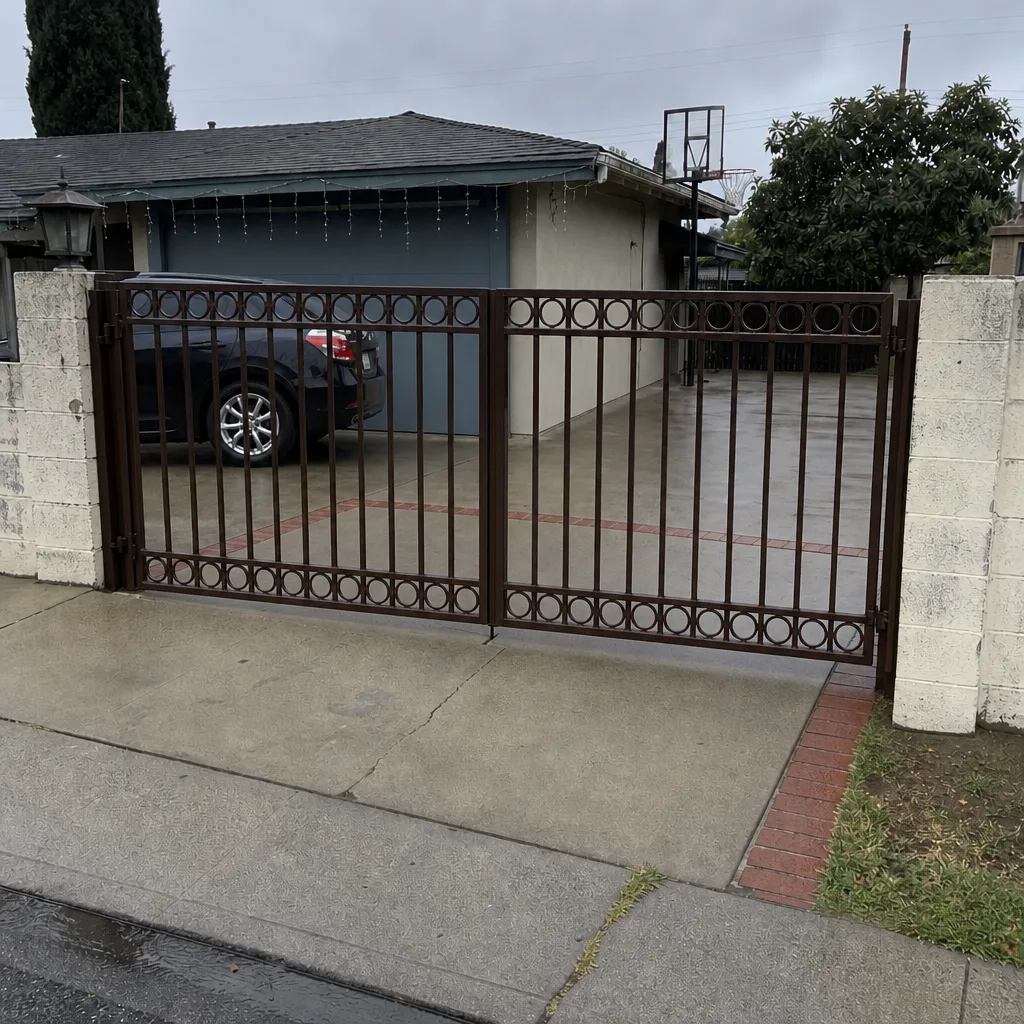 After
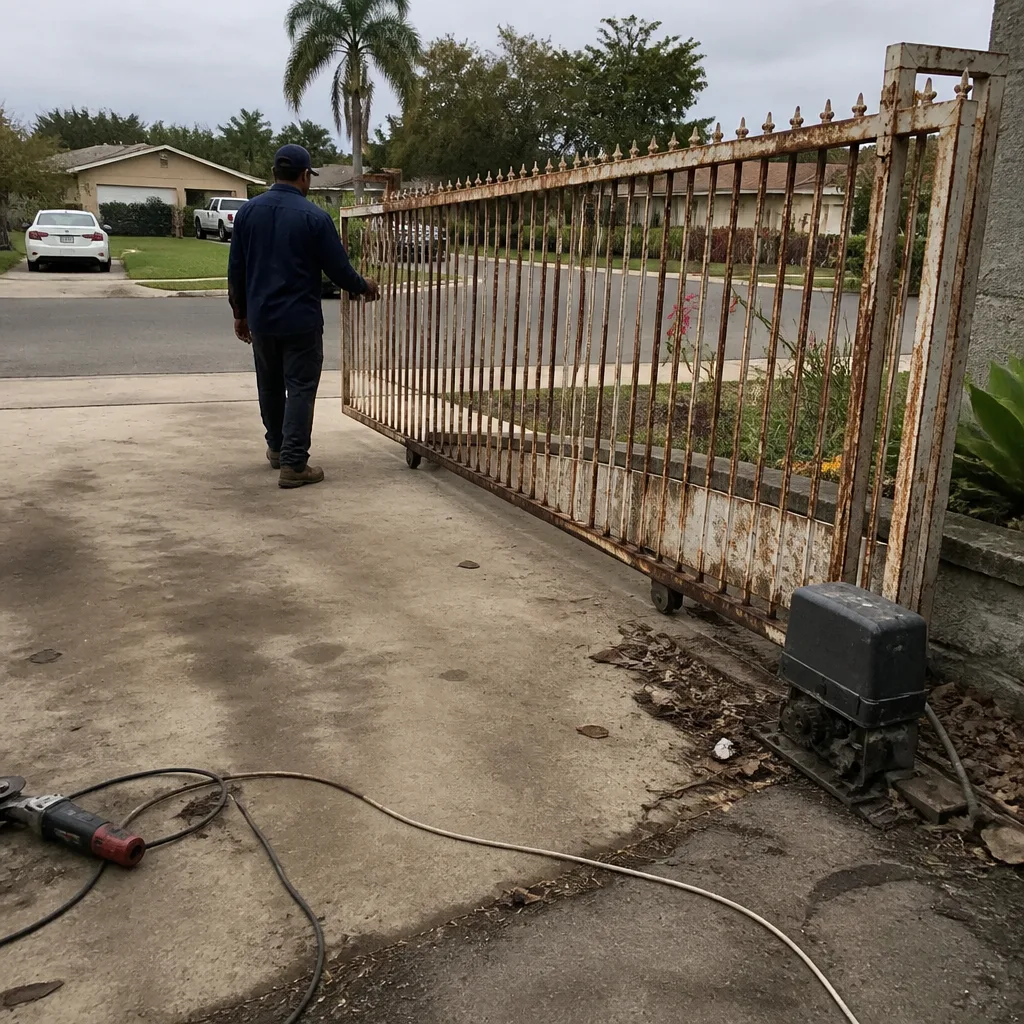 Before
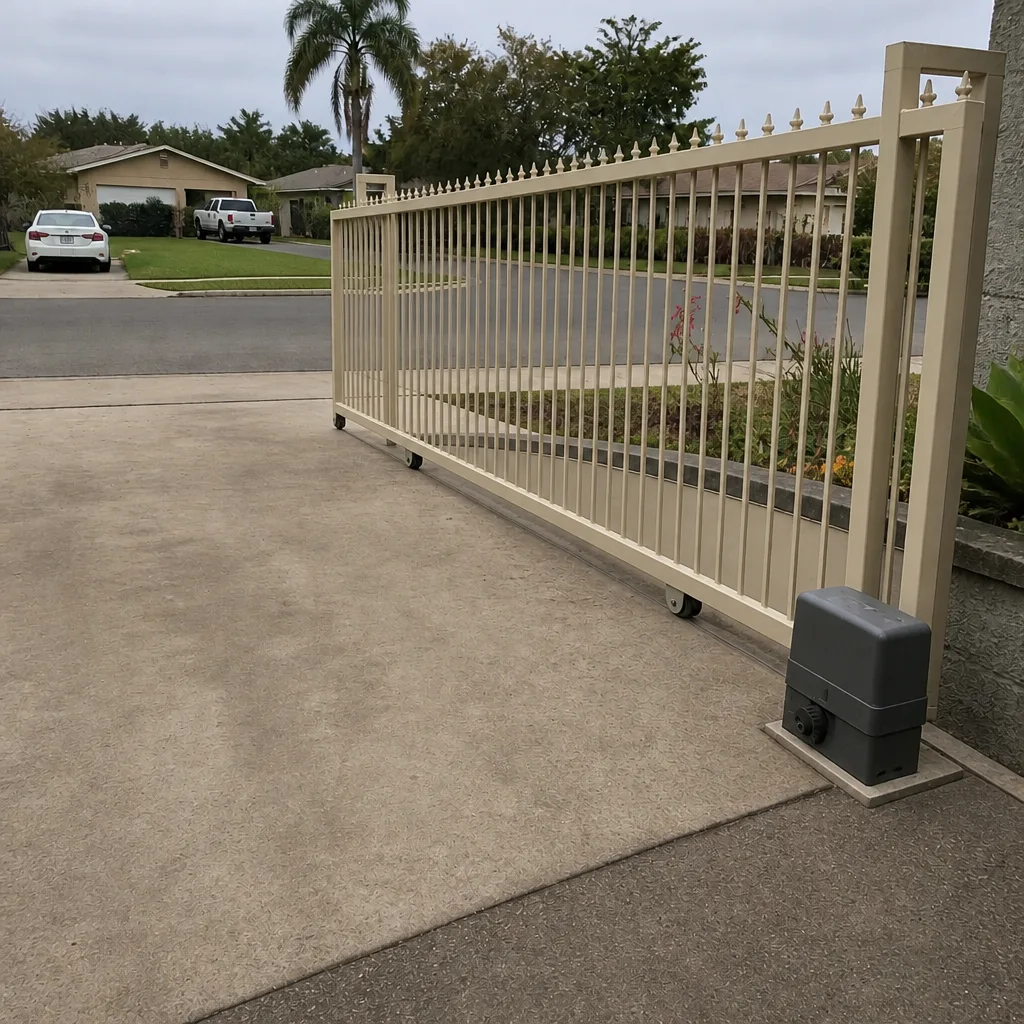 After
How DIY Work Affects Your Warranty
Manufacturer warranties on gate operators are conditional documents. They cover defects in materials and workmanship, not installation errors, not modifications, and not damage caused by improper service. When you open the control panel and start changing settings or replacing parts, you need to understand exactly where that leaves you with the manufacturer.
Most gate operator warranties, including the current terms from DoorKing, LiftMaster, and Elite, contain an express exclusion for damage resulting from installation or service not performed by a qualified professional. That language varies by brand, but the intent is consistent. If a board fails because a homeowner wired a new photo eye to the wrong terminal, the manufacturer is under no obligation to replace that board. You haven’t voided the warranty by performing maintenance. You’ve voided it by performing a repair that caused a failure.
There’s a second aspect we want to make plain. When a professional later services a gate that has been modified by the owner, that professional is working blind in one specific way: the installation no longer matches the manufacturer’s documented baseline. We don’t know if the force setting was raised, if a jumper was removed, if the limit switches were manually repositioned. The diagnostic process changes from finding the fault to reconstructing the system’s history. That takes time, and it sometimes requires returning the operator to factory settings before the actual repair can proceed.
If you keep documentation, you help yourself. Write down what you changed, when you changed it, and take a photo of the wiring before you unplug anything. If the repair you’re considering is beyond the maintenance list, consider whether the savings are worth the loss of warranty protection. In Westminster, where a significant number of driveways run on electric gates installed a decade or more ago, that warranty may have lapsed anyway. But if your operator is newer, the warranty is a real asset you’re putting at risk.
The Break-Even Point: When a DIY Mistake Costs More Than a Pro Visit
Homeowners often frame the DIY decision as a simple comparison: the cost of the part versus the cost of a service call. That framing ignores the three most expensive outcomes of gate work: buying the wrong part, damaging the control board, and creating a compliance problem that surfaces later. Let’s walk through the real math.
Wrong part, by brand. Gate operators are not interchangeable across brands. A Mighty Mule board doesn’t work in a DoorKing operator. Even within a brand, board revisions change pin layouts from year to year. If you buy a used board for an Elite operator and it’s the wrong revision, you’ve spent money on a part you can’t return, and you still need the correct one. That’s a hundred dollars or more gone before any repair actually happens. A professional diagnosis identifies the exact board revision before any money leaves your pocket.
Board damage from a wiring error. This is the one we see most. A homeowner replaces a photo eye sensor, crosses two low-voltage wires, and powers up the operator. The board, undervoltage-protected and unforgiving, releases the magic smoke. The sensor cost forty dollars. The board replacement is several hundred, and the operator is down until the new board arrives. A professional sensor replacement would have taken fifteen minutes and included testing.
Compliance liability. You can’t put a price on a personal injury claim, but you can put a price on the insurance implications. If a gate injury occurs and the investigation finds that the operator’s force limits were set above the manufacturer’s specification by the homeowner, the insurance carrier has grounds to deny coverage. The cost of defending a personal injury case in Orange County, even successfully, starts in the tens of thousands. The cost of having a specialist set the force correctly is a service call.
The break-even point, in our honest assessment, is this: if the repair involves the operator’s electronics or its safety systems, the expected cost of a DIY attempt, including the probability-weighted cost of a board failure or an improper setting, exceeds the cost of a gate repair call. That’s not a sales pitch. It’s arithmetic.
Common Mistakes to Avoid
- Using the wrong lubricant on the operator arm. Petroleum-based grease collects dust and thickens in Westminster’s summer heat. Use what the manufacturer specifies, usually a silicone or lithium-based product. The wrong grease creates drag that mimics a motor failure.
- Raising the force to fix a mechanical problem. A gate that’s hard to move has a physical cause: a bad wheel, a bent track, a failed bearing. Crank the force up and you’ve masked the symptom while creating an entrapment hazard. Fix the mechanical problem.
- Replacing a chain or belt without checking sprocket wear. On chain-driven slide gate operators, a new chain on a worn sprocket wears out fast and can jump teeth under load. The chain and sprocket should be replaced together. This is not a beginner-level job.
- Ignoring the manual. Every operator has a manual with brand-specific adjustment procedures, warning labels, and troubleshooting charts. Skipping it to follow a generic video is how boards get fried and settings get scrambled.
- Testing the gate with yourself in the path. Never test an entrapment reversal by putting your hand or body in the gate’s path. Use a rigid object that won’t be damaged if the reversal fails. This sounds obvious, but we hear about it too often.
- Forgetting the photo eye alignment. Many “reversal problems” on Westminster gates are dirty or misaligned photo eyes, not force issues. Clean and align the eyes before touching any other setting. This five-minute check resolves a surprising share of trouble calls.
- Drilling into the gate leaf without knowing what’s behind it. On electric gates, wiring for the safety edge or the keypad often runs through the leaf’s frame. Drilling blind can sever that wiring. Know your gate’s layout before you mount anything.
When to Call a Professional
If the gate won’t open at all and the operator hums, the motor’s start capacitor has likely failed, and that’s an electrical repair. If the gate opens halfway and reverses every time, the limit switches are misaligned or an obstruction is tripping the safety system, and either condition requires a diagnostic visit. If the gate moves erratically only when the sun hits it a certain way, the photo eyes are affected by glare or wiring, not by a setting you should adjust yourself.
If you’ve already attempted a repair and the problem got worse, stop. Continuing to change settings without a diagnostic baseline is how thirty-minute repairs become full board replacements. We work on DoorKing, Elite, Mighty Mule, and LiftMaster systems specifically, and we’d rather see your gate before the smoke comes out of it than after. Gate Repair Westminster offers free estimates in Westminster. Call (866) 569-6562. We answer 24/7. Fast dispatch from 7am to 7pm, Sunday through Friday.
Frequently Asked Questions
You can legally perform maintenance tasks like cleaning sensors, replacing a wheel, and reprogramming a remote. You cannot legally perform electrical work on the operator, the control board, or the safety devices without a California contractor’s license. Westminster adheres to state contractor law on this point, and there’s no homeowner exemption for electrical work on gate operators.
Never attempt force limit adjustment, obstruction sensitivity adjustment, control board replacement, motor work, capacitor replacement, or any repair requiring access to the line-voltage side of the operator. These jobs require a licensed specialist and carry both electrical and entrapment hazards.
It can, yes. Most Gate Manufacturers in the brands we service, including DoorKing and LiftMaster, exclude warranty coverage for damage caused by improper service or installation. If your adjustment causes a board failure, the manufacturer can deny the claim.
Performing electrical work without a contractor’s license violates California Business and Professions Code section 7028. The wiring inside a gate operator’s control panel is electrical work for the purposes of that statute. Ask the city of Westminster about permit requirements if your repair involves structural changes to the gate or its posts.
Intermittent faults are often wiring, limit switch, or board-related issues that worsen over time. Westminster’s dry heat accelerates capacitor and solder joint fatigue in older operators, producing intermittent failures that can’t be diagnosed by trial and error at the panel. An intermittent access-control failure is a security problem, so we recommend addressing it before it becomes a total failure.
Repair pricing depends on the specific failure and which brand you’re running. A sensor replacement costs less than a control board, and a Mighty Mule board costs less than an Elite board of similar vintage. The written estimate sets the final price before any work begins. Call (866) 569-6562 for a free estimate. We answer 24/7. Fast dispatch from 7am to 7pm, Sunday through Friday.
The Bottom Line
Some gate repairs in Westminster are genuinely safe for a homeowner with basic tools and a Sunday morning. Lubricating hinges, cleaning sensors, replacing a wheel, reprogramming a remote: these are maintenance tasks that don’t touch the electrical or safety systems. Everything else, from force settings to control boards to safety edges, lives inside a legal framework and a safety standard that don’t bend for enthusiasm. California contractor law says electrical gate work requires a licensed professional. UL 325 says the gate’s entrapment protection must be configured to protect people, not just move the gate. Both of those rules are the reason this guide draws a hard line where it does. When the repair is on our side of that line, call the specialist. That’s us.
Written by the team at Gate Repair Westminster, serving Westminster since 2011.
For gate repair, electric gate repair, or a new installation in Westminster, call (866) 569-6562. We answer 24/7. Fast dispatch from 7am to 7pm, Sunday through Friday.