
Last updated November 4, 2026
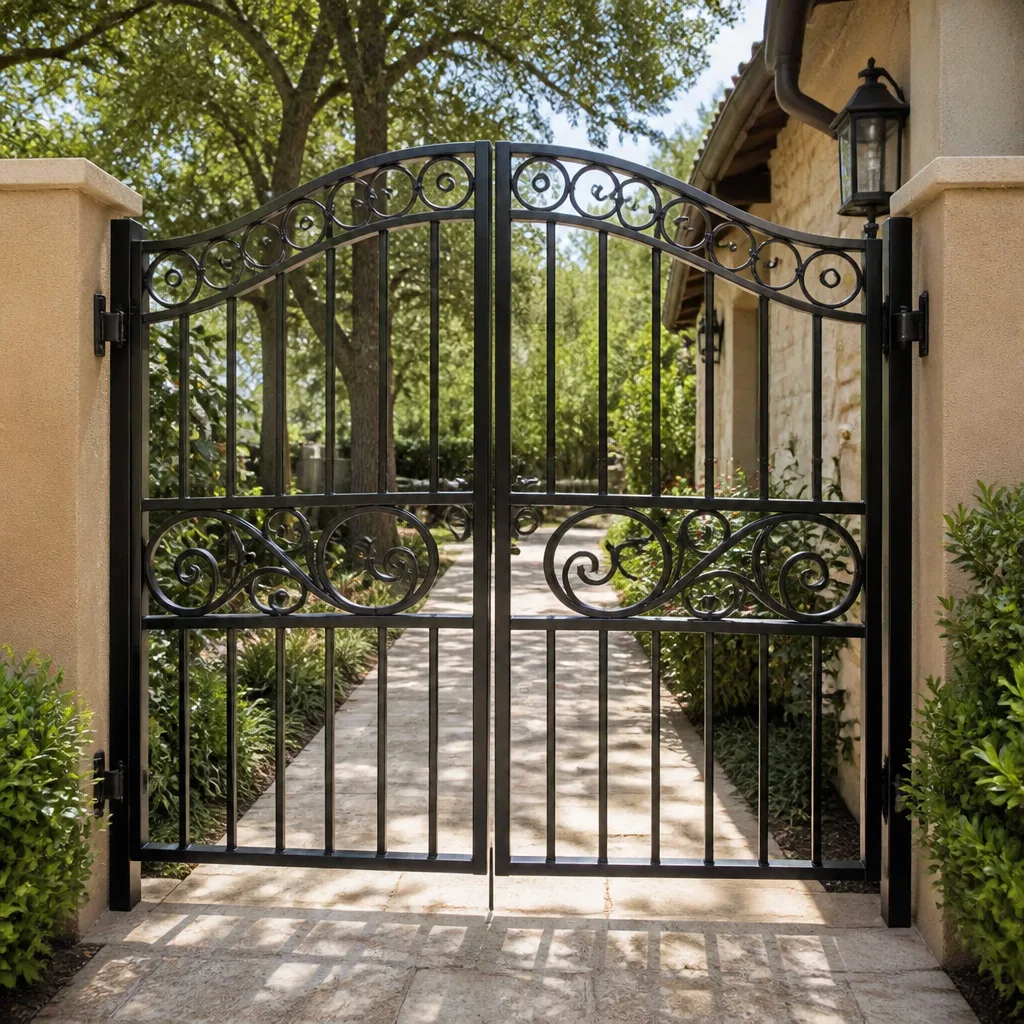 Wrought iron
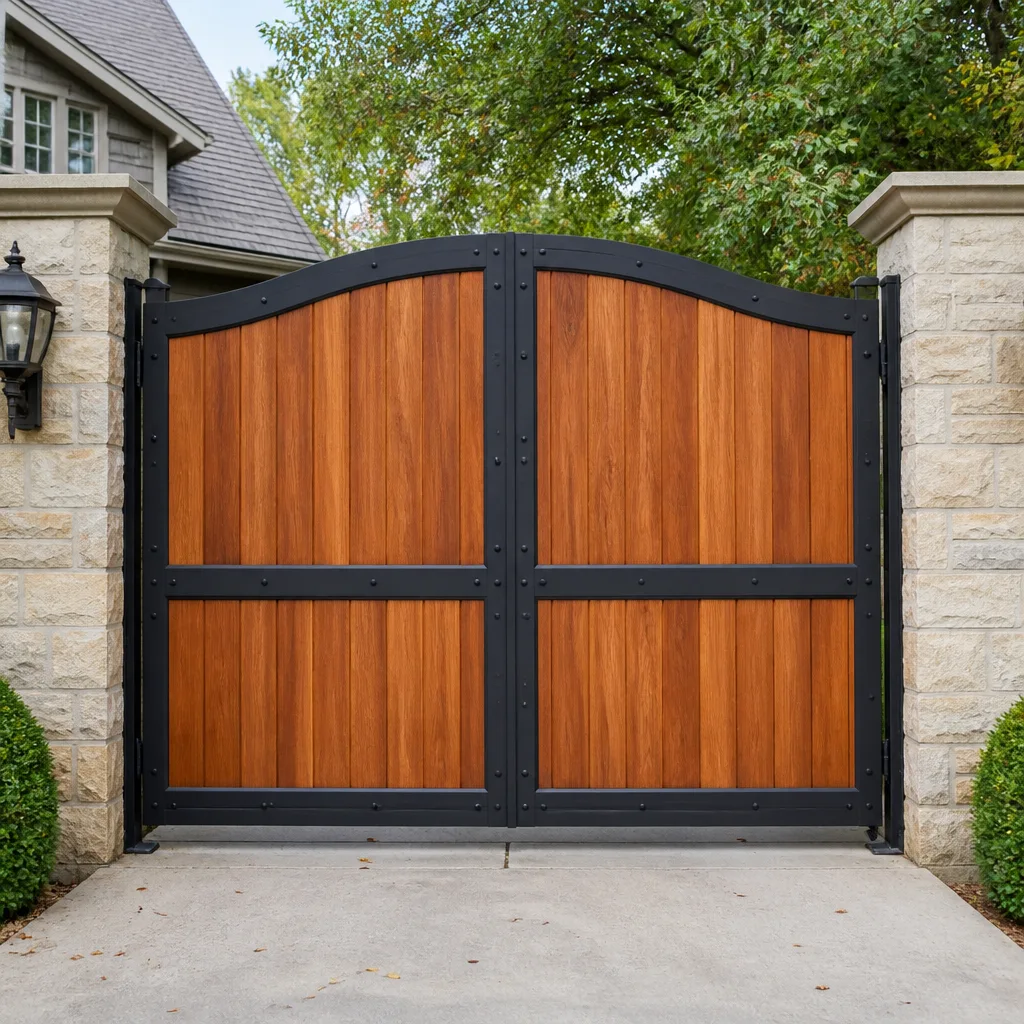 Wood & steel frame
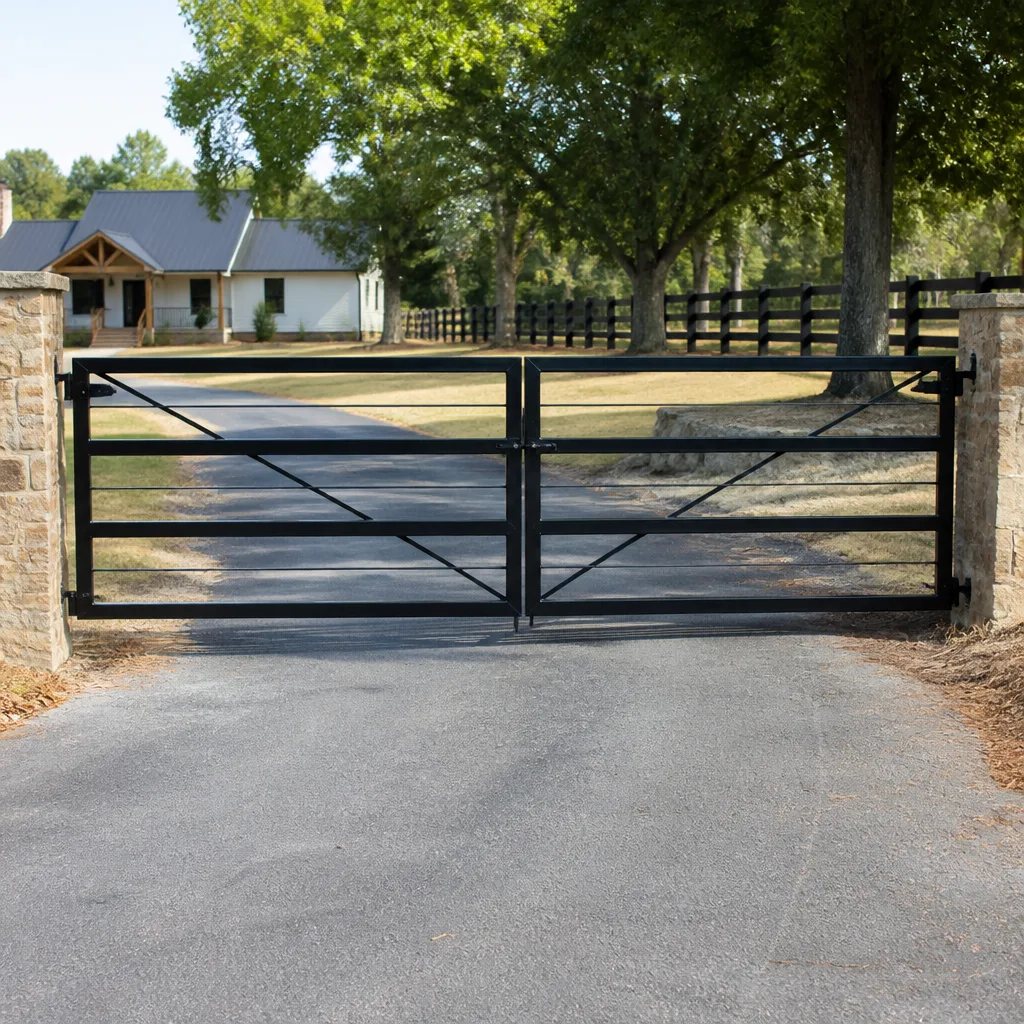 Farm & ranch
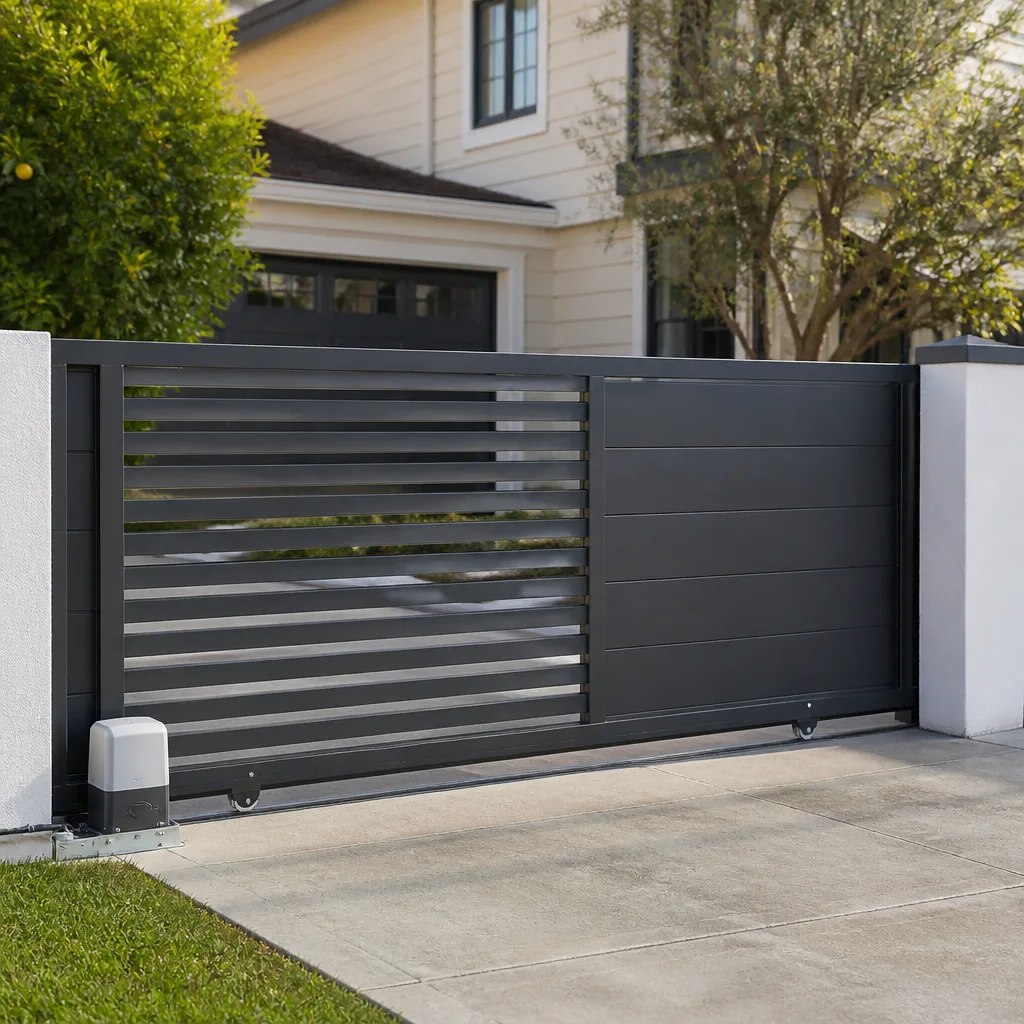 Sliding driveway gates
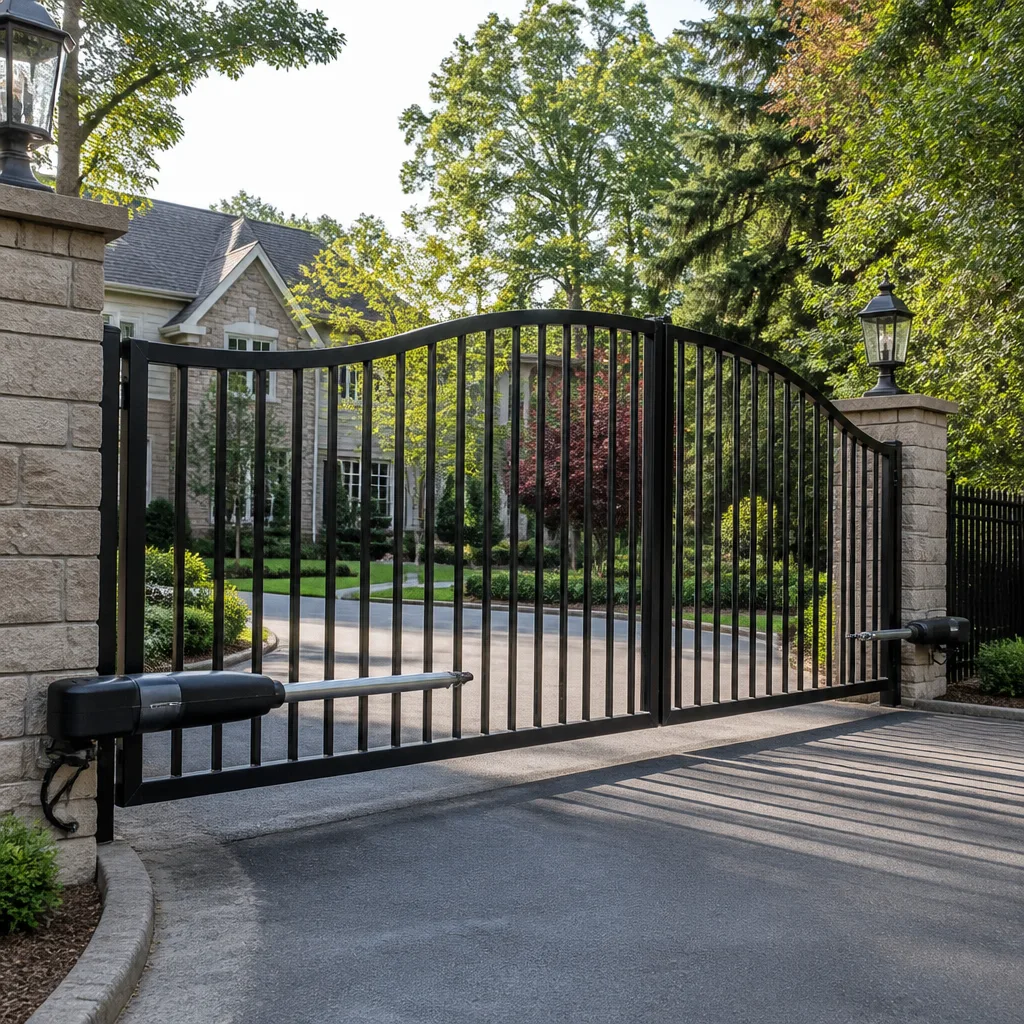 LiftMaster operators
Free on-site gate assessment - hinges, posts, and your LiftMaster or Nice gate operator checked before anything is quoted
The assessment is free and the quote is the invoice.
Get your free estimateSeasonal Gate Repair Care for Westminster: Year-Round Homeowner’s Guide
The season most damaging to gate operators in Westminster isn’t the winter. It’s the late-summer heat spike that pushes control boards past their thermal limits right when irrigation systems are running at full schedule. A gate that has worked flawlessly all year will suddenly refuse to open on a 98-degree afternoon, and the owner assumes the motor finally wore out. Usually it hasn’t. What actually happened is the control board overheated inside its enclosure, or a sprinkler head that shifted over the winter has been misting the operator housing every night for six weeks. This guide covers how Westminster’s actual weather patterns, not a generic four-season template, affect gate hardware, and what a homeowner should check in each weather window to avoid a mid-cycle failure.
Quick Answer
Seasonal gate care in Westminster means aligning maintenance with three local weather windows: a dry, UV-intense summer that overheats control boards; a marine-layer season that drives condensation corrosion inside electrical enclosures; and a wet El Niño winter that floods slide tracks and stresses hydraulic fluid. Homeowners should inspect ventilation and shade before August heat, check for internal moisture and corrosion in early fall, audit drainage before the rains arrive, and do a full system reset inspection in spring. Most seasons require under an hour of homeowner attention and can prevent the two failures we see most in Westminster: heat-faulted boards in September and water intrusion into motors in January.
Styles & brands we work with
- Wrought iron
- Wood & steel frame
- Farm & ranch
- Sliding driveway gates
- LiftMaster operators
Table of Contents
- Summer Thermal Management for Control Boards and Operators
- Marine Layer Season: Condensation and Corrosion Inside Enclosures
- Winter and El Niño Prep: Drainage, Tracks, and Hydraulic Fluid
- Spring Reset: The Post-Wet-Season Inspection That Catches Corrosion Early
- A Month-by-Month Gate Maintenance Calendar for Westminster
- Common Mistakes to Avoid
- When to Call a Professional
- Frequently Asked Questions
Summer Thermal Management for Control Boards and Operators
Westminster summers are dry and bright, with weeks of direct sun landing on gate equipment that was never designed to bake all afternoon. Most residential operators are rated to operate in ambient temperatures up to roughly 104 degrees Fahrenheit. That rating assumes the control board sits inside a ventilated enclosure with airflow. What we actually find in Westminster are enclosures mounted on west-facing stucco walls, painted dark colors, with no shade and a closed cover. Inside that box on a 95-degree day, the temperature can exceed 130 degrees. The board’s thermal protection shuts the gate down. The homeowner calls it a dead motor. It is a heat fault, and it happens to FAAC and BFT operators just as often as anything else because the enclosure matters more than the brand.
The summer prep checklist for Westminster homeowners:
- Check enclosure ventilation. Open the operator cover and look for clear vent holes or louvers. If the enclosure is sealed tight and the unit runs warm, it needs ventilation added or a shaded relocation.
- Assess afternoon shade. Stand at the operator at 3 p.m. in August. If it is in full sun, a simple shade panel or planting that blocks the afternoon rays can drop internal temperatures by 15 to 20 degrees.
- Inspect sprinkler heads near the gate. Summer irrigation runs more frequently. A head that has drifted a few degrees now mists the operator housing daily. Water plus heat plus an energized control board is a fast path to a short.
- Listen to the motor. A motor that labors in the heat, sounds slower, or trips its internal overload is working harder because heat increases electrical resistance. That is an early warning, not a random noise.
- Check the battery backup. If the system has one, heat degrades sealed lead-acid batteries faster than any other local weather condition. A battery that lasted three years in a cool garage may last two in a hot Westminster enclosure.
Our approach to summer service calls in Westminster starts with the same question: when did the gate fail? If the answer is mid-afternoon and the gate works again after sunset, we are almost certainly chasing heat, not a failed component. That diagnostic distinction saves Westminster homeowners from replacing a control board that only needed shade and ventilation.
Marine Layer Season: Condensation and Corrosion Inside Enclosures
Westminster sits far enough inland that the marine layer is inconsistent, but it arrives often enough in late spring and early summer to matter. Cool, damp mornings are followed by warm afternoons. That cycle creates condensation inside electrical enclosures the same way a cold drink sweats on a warm day. Moisture settles on control boards, terminal strips, and sensor wiring. It does not look dramatic. It looks like a thin film of water and, over weeks, a white or green haze on copper connections. The corrosion pattern this creates looks like age damage, but it can develop in a single marine layer season if the enclosure is not sealed and the board is never inspected.
The marine layer attack sequence runs like this:
- Night and early morning bring damp air into the enclosure through open knockouts, worn gaskets, or missing cover screws.
- The afternoon sun warms the housing, evaporating the moisture but leaving mineral residue on contacts.
- The cycle repeats daily for six to eight weeks.
- A connection that had 2 ohms of resistance now has 200 ohms, and the safety sensor circuit reads it as a fault.
- The gate refuses to close automatically, or the keypad stops responding, or the remote receiver drops signal.
Linear and Viking operators are common in Westminster, and both brands use low-voltage control circuits that are sensitive to exactly this kind of corrosion-driven resistance. A homeowner can do a basic visual check twice a year: open the cover, look for haze on any connection, and sniff for ozone or a burnt smell. But if corrosion is already visible, the fix is not a can of contact cleaner. It is cleaning the terminals properly, checking every crimp, and sealing the enclosure entry points. We see too many Westminster gates where a quick spray made the problem temporarily better and permanently worse, because the spray residue attracted more dust and moisture.
Winter and El Niño Prep: Drainage, Tracks, and Hydraulic Fluid
Westminster winters are mild, but they are not dry. El Niño years bring extended wet periods, and even normal winters produce enough rain to flood a low spot in the driveway. Slide gates are the most vulnerable. Their track sits in the lowest part of the gate travel, and if the drainage around it was designed poorly or has silted in, water ponds in the track. A slide gate that pushes through standing water every day carries grit into its rollers. The gate gets harder to move. The operator works harder. Failures follow.
Winter prep for a Westminster slide or swing gate:
- Clear the track channel. Remove leaves, gravel, and caked soil from slide gate tracks. Debris in the channel changes the gate’s rolling geometry and loads the motor unevenly.
- Check the drainage path. Water should flow away from the track, not through it. If puddles form around the gate after rain, address the grading before the wet season deepens.
- Inspect hydraulic swing operators. Hydraulic fluid thickens when temperatures drop. Westminster nights can reach the low 40s, and older hydraulic units get noticeably slower and noisier in cold weather. If the gate opens slowly on a cold morning, the fluid or the pump needs attention, not the hinge.
- Test the safety edges and photo eyes. Wet conditions and low winter sun angles combine to cause false obstruction readings. A gate that reverses for no reason is usually a sensor issue, and sensor faults spike in winter.
- Check the gate’s physical structure. Wet soil softens post footings. A gate that sagged slightly in the dry season may sag more in the wet one because the ground under the post is saturated.
Window and door sensors are irrelevant here. The winter enemy in Westminster is water, not ice. A drainage audit around the gate costs nothing but time and prevents the most expensive winter repair we know: a flooded operator motor that needs full replacement rather than a bearing or seal repair.
Spring Reset: The Post-Wet-Season Inspection That Catches Corrosion Early
Spring in Westminster is the reset point. The rains have stopped, the marine layer has not yet arrived in force, and the gate has just spent several months operating through its wettest and coolest conditions. This is the moment to inspect everything that winter stressed, before the summer heat adds thermal load to the same components that absorbed moisture for months.
The spring inspection sequence we recommend:
- Open every enclosure. Check for water stains, mineral deposits, or corrosion that appeared since fall. If the inside of the enclosure smells musty or shows fogging, it took on water during the winter.
- Test the safety systems as a system. Block the photo eye and confirm the gate stops and reverses. Press the safety edge and confirm the same. Do this for both open and close directions. Most Westminster homeowners never test these until the gate fails to reverse and something gets hit.
- Check all mounting bolts and hinge hardware. Wet-dry cycles loosen fasteners. A swing gate that wobbles on its hinges was not installed loose; the wood or steel expanded and contracted through the winter and worked the bolts out.
- Look at the gate’s alignment. Slide gates should track straight with no side-to-side play. Swing gates should sit level with consistent gap at the latch. Misalignment in spring only compounds as the metal expands in summer.
- Test the manual release. In a power failure, can the gate be opened by hand? The manual release is rarely used, and when it is needed after a power outage, it is often seized. Operate it once a year and then confirm it re-engages.
- Run the gate five full open-close cycles. Listen for changes in sound, speed, or hesitation. Any change from the gate’s normal pattern is diagnostic information, even if the gate still works.
This is also the right time to check the condition of the gate repair components that see seasonal wear, such as rollers, hinges, and chain tension. Catching a worn roller in April means a $200 repair instead of a $900 operator replacement in September when the heat finishes what the wear started.
A Month-by-Month Gate Maintenance Calendar for Westminster
Most gate maintenance guides follow a four-season template written for Chicago or Denver. Westminster does not work that way. The following calendar is built around the actual weather pattern we see in Westminster: dry heat from August through October, intermittent marine layer fog in May and June, and rain concentrated between December and March with occasional El Niño intensification.
January
Peak wet season. Check that the gate area drains properly after every significant rain. Inspect the operator enclosure for water entry. Do not pressure-wash the gate or operator during this month; the added water finds its way into seals that are already stressed.
February
Continue drainage monitoring. Test the auto-reverse and photo eyes; wet weather and low sun cause sensor faults. If the gate opens or closes slower than normal on cold mornings and it is a hydraulic system, note the behavior for a professional evaluation.
March
The rains taper. This is the ideal month for the full spring reset inspection described above. Everything is wet-season exposed, and there is time to address findings before summer.
April
Check hardware tightness and gate alignment. The soil under the posts has gone through a full wet-dry cycle and may have settled slightly. Lubricate hinges and rollers if the gate is manual or if manufacturer guidance allows it for the specific operator model.
May
Marine layer begins. Start watching for condensation inside the operator enclosure on damp mornings. If fog or haze appears inside the cover, note which connections look wet and plan for a seal or gasket repair.
June
Marine layer peak. Open the enclosure on a dry morning and look for corrosion starting on terminals. Test the keypad and remote receiver; both are sensitive to moisture-driven resistance changes.
July
Heat begins building. Check afternoon sun exposure on the operator enclosure. If it is hot to the touch, consider shade before the real heat arrives. Do not enclose the operator in a cabinet or box without ventilation; that makes the problem worse.
August
Peak heat month. This is the highest failure month for Westminster gate operators. If the gate faults on hot afternoons and works in the evening, the issue is thermal. Call for an evaluation before the board permanently fails rather than after.
September
Heat continues but the marine layer can return in patches. The combination of hot days and damp mornings is the hardest on electrical components. A gate that survived August sometimes fails in September because it has been heat-cycling for eight weeks.
October
Santa Ana winds and low humidity. Dust and fine grit blow into everything. Check the track and hinges for accumulated grit and clean them. Dry conditions also mean the gate is not benefiting from rain rinsing, so buildup is worse than in wetter months.
November
Pre-rain prep. Clear leaves and debris from slide tracks. Check the drainage path and remove anything that would divert water into the gate area. Test the battery backup if one is installed.
December
The wet season starts. After the first meaningful rain, walk the gate area and look for puddling, track flooding, or water running toward the operator. Address drainage before the heavier rains of January and February. This is also a good month to schedule any electric gate repair that was noted during the year, before the winter weather makes it an emergency.
Common Mistakes to Avoid
Most of the seasonal gate damage we see in Westminster is preventable, and most of it comes from the same handful of judgment calls. Avoiding these does not require technical skill. It requires not doing the thing that feels helpful but actually makes the situation worse.
- Sealing the operator enclosure too tightly before summer. A homeowner worried about marine layer moisture caulks every opening and closes every vent. The enclosure then cooks in August because it has no airflow. Ventilation matters more than sealing in Westminster’s summer heat.
- Spraying contact cleaner into a corroded control board. The residue from many sprays attracts dust and moisture, and the underlying corrosion is still there weeks later. Cleaning contacts properly requires disassembly, not a quick spray through a cover opening.
- Ignoring a gate that opens slowly in winter. Slow operation in cold weather gets rationalized as “just the cold.” On a hydraulic swing gate in Westminster, slow cold-weather operation usually means thickened or degraded fluid, and waiting until the gate stops entirely increases the repair cost.
- Building an enclosure or cabinet around the operator for cosmetic reasons. Without active ventilation, the result is a shorter operator life. If the goal is appearance, work with a professional on an enclosure that includes airflow, not a sealed box.
- Leaving a misaligned gate for another season. A sagging or dragging gate increases the load on the motor every cycle. The motor fails sooner. The misalignment was the root cause, and catching it early is always cheaper than replacing the operator later.
- Assuming the gate’s safety sensors are fine because the gate still opens. Safety devices can fail silently. The gate continues to operate, but the auto-reverse no longer works, and the first sign of failure is an injury or property damage. Test them seasonally.
- Pressure-washing the operator housing. It seems like cleaning, but the water finds gaskets and seals that are not rated for a pressure spray. Operators are electronics, not patio furniture. Wipe them down; do not blast them.
When to Call a Professional
Some seasonal maintenance is safely within a homeowner’s ability: visual checks, track cleaning, drainage observation, and listening for changes in operating sound. Other conditions warrant a professional before the gate fails completely. If the gate faults only on hot afternoons, the enclosure temperature or the board itself needs professional evaluation. If corrosion is visible on terminals or the inside of the enclosure has ever been wet, the fix is not a wipe-down. If a slide gate has come off its track or a swing gate has sagged enough to drag, the structural issue will not correct itself. If you see a burned or melted component on a control board, stop using the system and call. The same applies to any repeated tripping of a breaker, any spark or smoke, or any gate that moves unpredictably. Gate Repair Westminster offers free estimates in Westminster, and we work on the specific brands most common in this city, including FAAC and BFT operators, so the diagnosis is usually faster than a generalist visit. Call (866) 569-6562. We answer 24/7. Fast dispatch from 7am to 7pm, Sunday through Friday.
Frequently Asked Questions
Twice a year is sufficient for most Westminster gates: once in March after the wet season ends, and once in October before the rains return. The August heat spike is a third checkpoint, but it is often just a visual inspection of sun exposure and enclosure temperature rather than a full maintenance session. If the gate is older, a hydraulic swing system, or exposed to full afternoon sun, a quarterly visual check is worth the effort.
That pattern is a thermal fault, meaning the control board or motor is overheating inside its enclosure during peak afternoon temperatures. Westminster routinely sees summer afternoons in the 90s, and a dark-colored enclosure with poor ventilation can push internal temperatures past the board’s operating limit. The gate works again once the temperature drops, which confirms the diagnosis. Shade, ventilation, or enclosure relocation resolves it, and a professional evaluation identifies which applies to your setup.
Yes, through repeated condensation cycles rather than direct rain. Damp mornings deposit moisture inside the enclosure, and warm afternoons evaporate it, leaving mineral residue that corrodes connections over the course of a single season. The damage looks like years of wear but can develop in six or eight weeks of marine layer weather. Checking inside the enclosure for haze or corrosion in May and June catches it early.
The priority is drainage around slide gate tracks and the path water takes across the driveway. Clear the track of debris, confirm that water flows away from the gate rather than through it, and check the operator enclosure for gaps where rain could enter. If the gate is hydraulic, note whether it runs slower than normal on cool mornings. Testing the manual release before the wet season is also smart, because a power outage during heavy rain is the worst time to discover the release is seized.
Most of the visual checks, track cleaning, drainage observation, and listening for changes in operating sound are within a homeowner’s reach. The limits are anything involving wiring, control boards, or operator internals. A gate operator runs on line voltage, and the control board carries power even when the gate is not moving. If the task requires a screwdriver to open an electrical enclosure and touch anything inside, it is a job for a professional.
FAAC, BFT, Linear, and Viking operators all appear regularly in Westminster, and while the seasonal maintenance principles are the same across brands, the specific failure patterns differ. FAAC hydraulic units respond to winter cold in a way that Linear electromechanical units do not. Viking enclosures have known ventilation constraints that matter in August. Brand matters for diagnosis, and a technician who knows the brand is not learning it on the customer’s gate. Call (866) 569-6562 for a Westminster gate evaluation with someone who works on these systems daily.
The Bottom Line
Westminster does not throw dramatic weather at a gate, but its three distinct weather windows each attack in a specific way: August heat kills control boards, marine layer condensation corrodes connections, and winter rain floods tracks and stresses hydraulics. A homeowner who checks ventilation before summer, watches for enclosure moisture in May and June, clears drainage before December, and does a full reset inspection in March will prevent the majority of gate failures this city sees. Most of that maintenance is visual and takes minutes. The failures happen when the check is skipped and a small problem compounds through a full weather cycle. When a check turns up something that needs a tool, a trained gate specialist is the right call, and the estimate is free.
Written by the team at Gate Repair Westminster, serving Westminster since 2011.
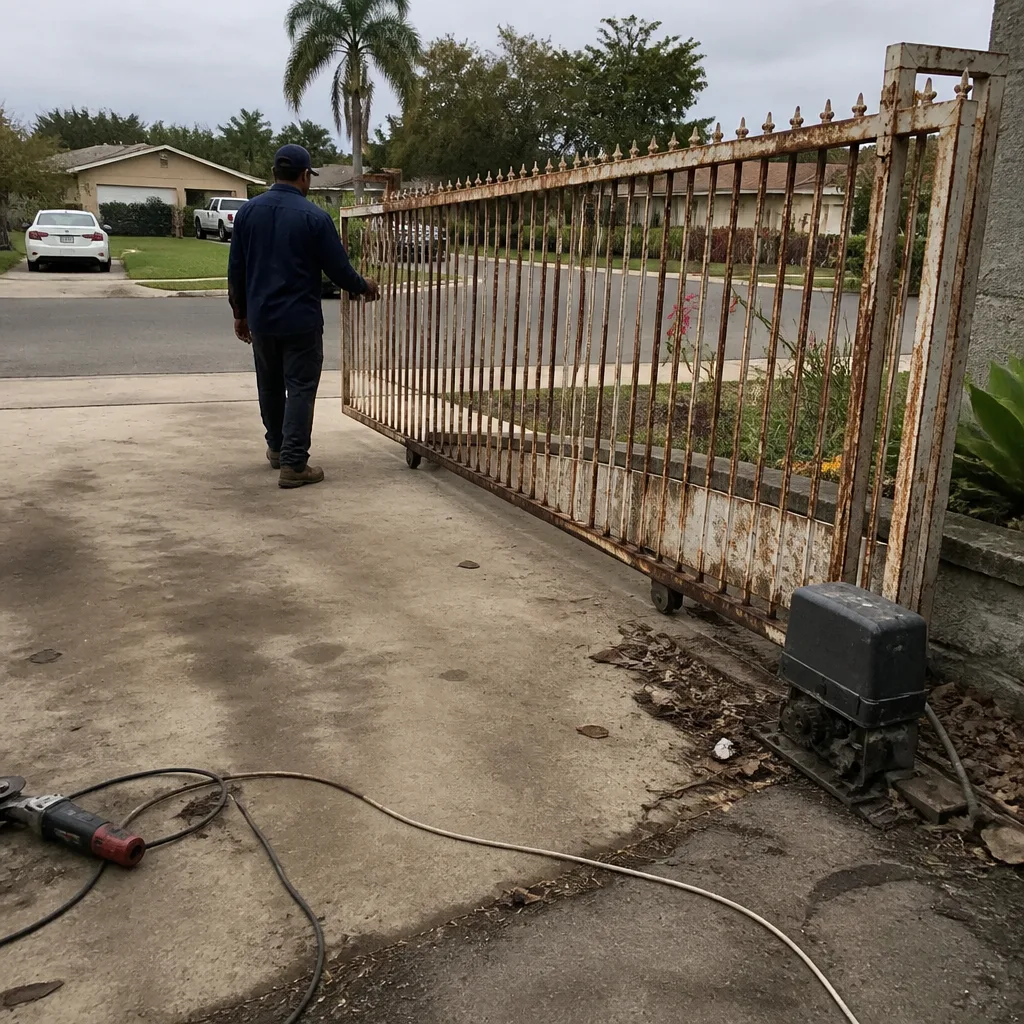
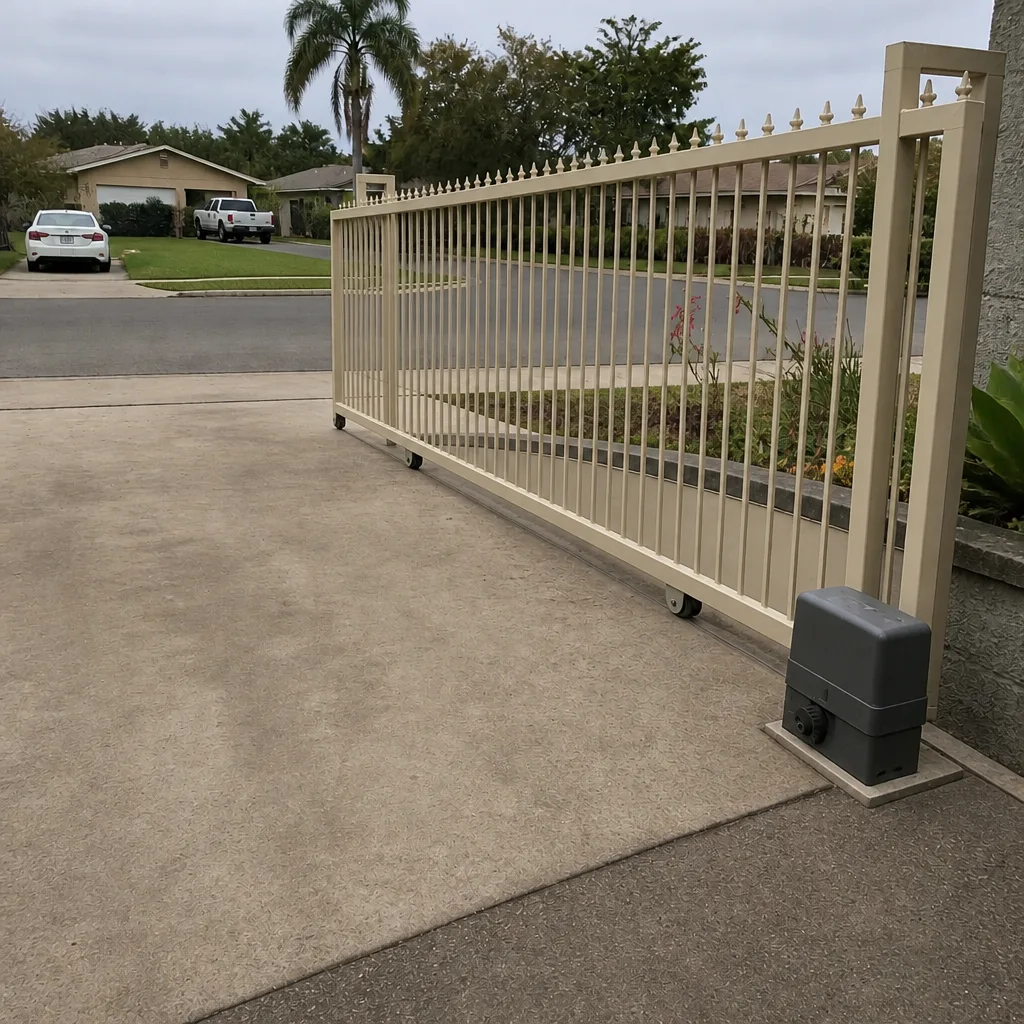
See the difference
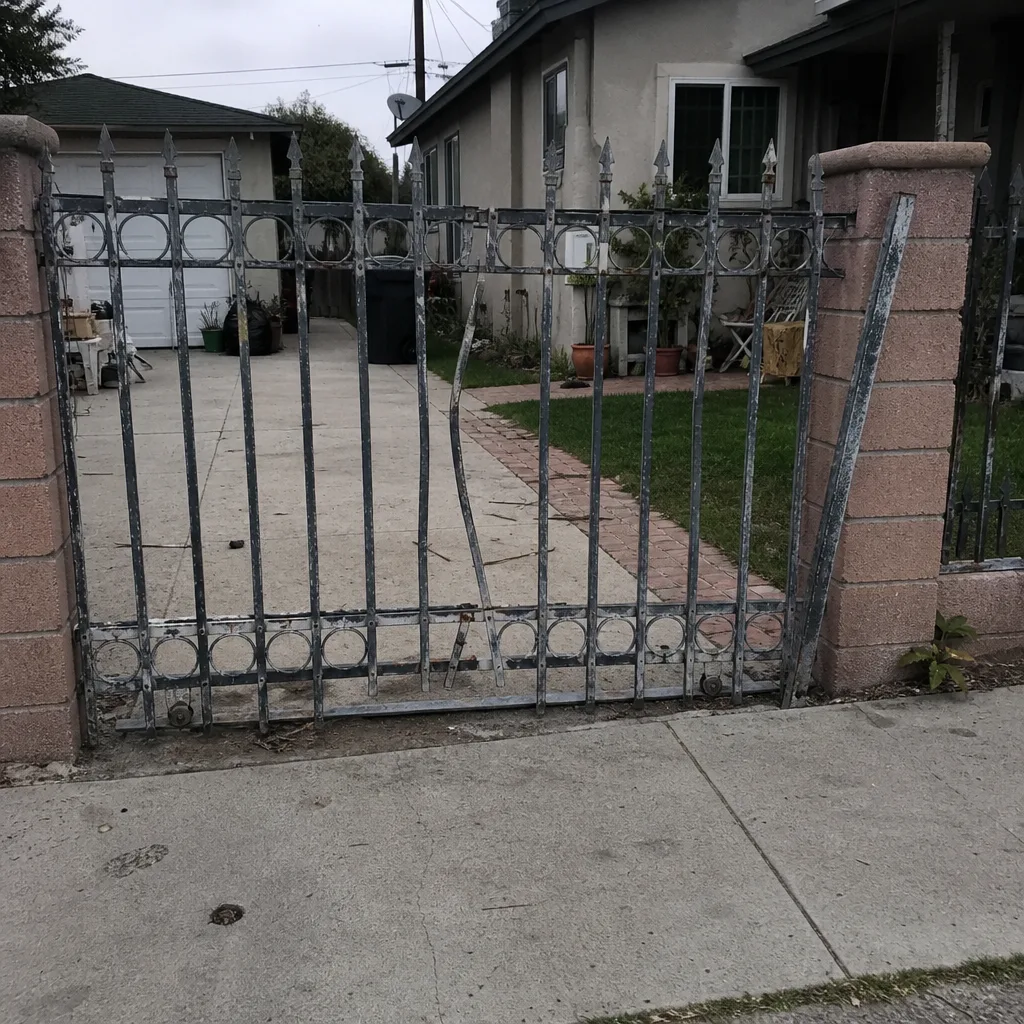 Before
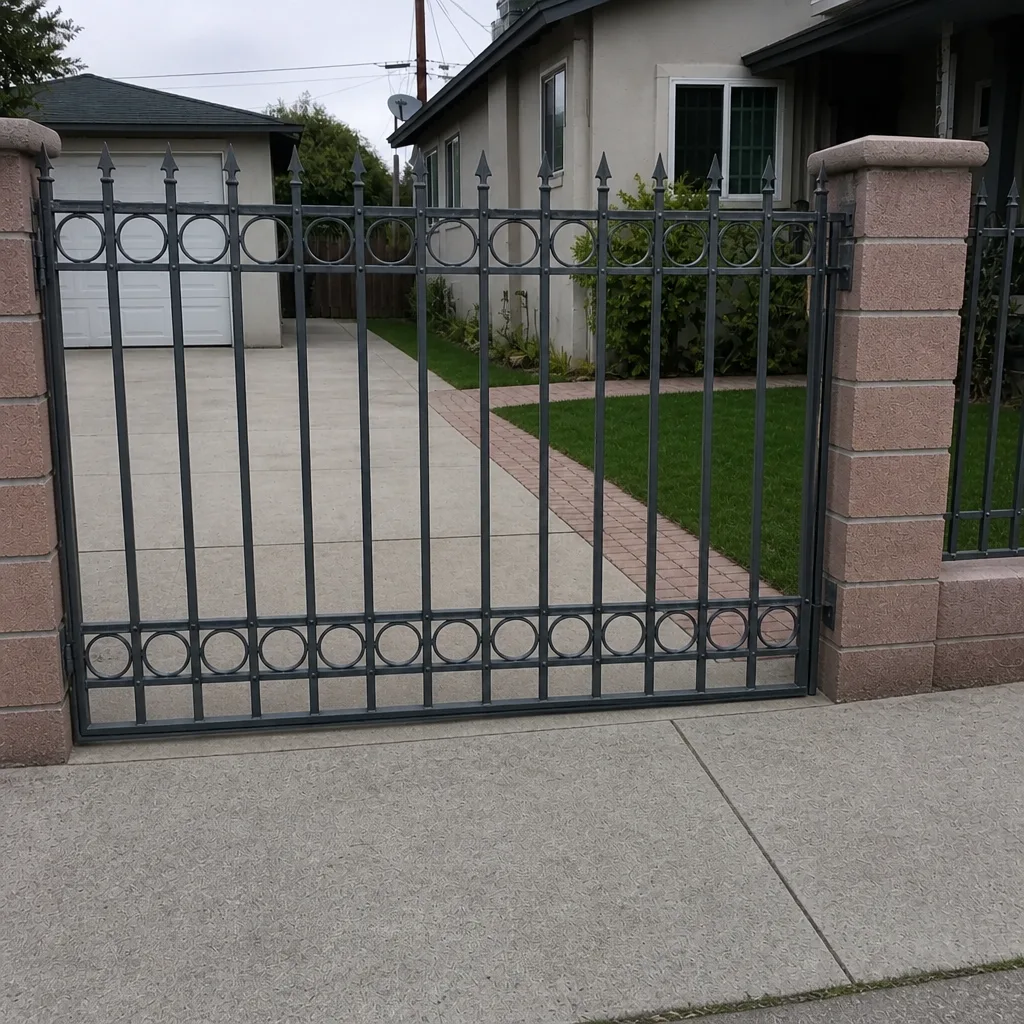 After
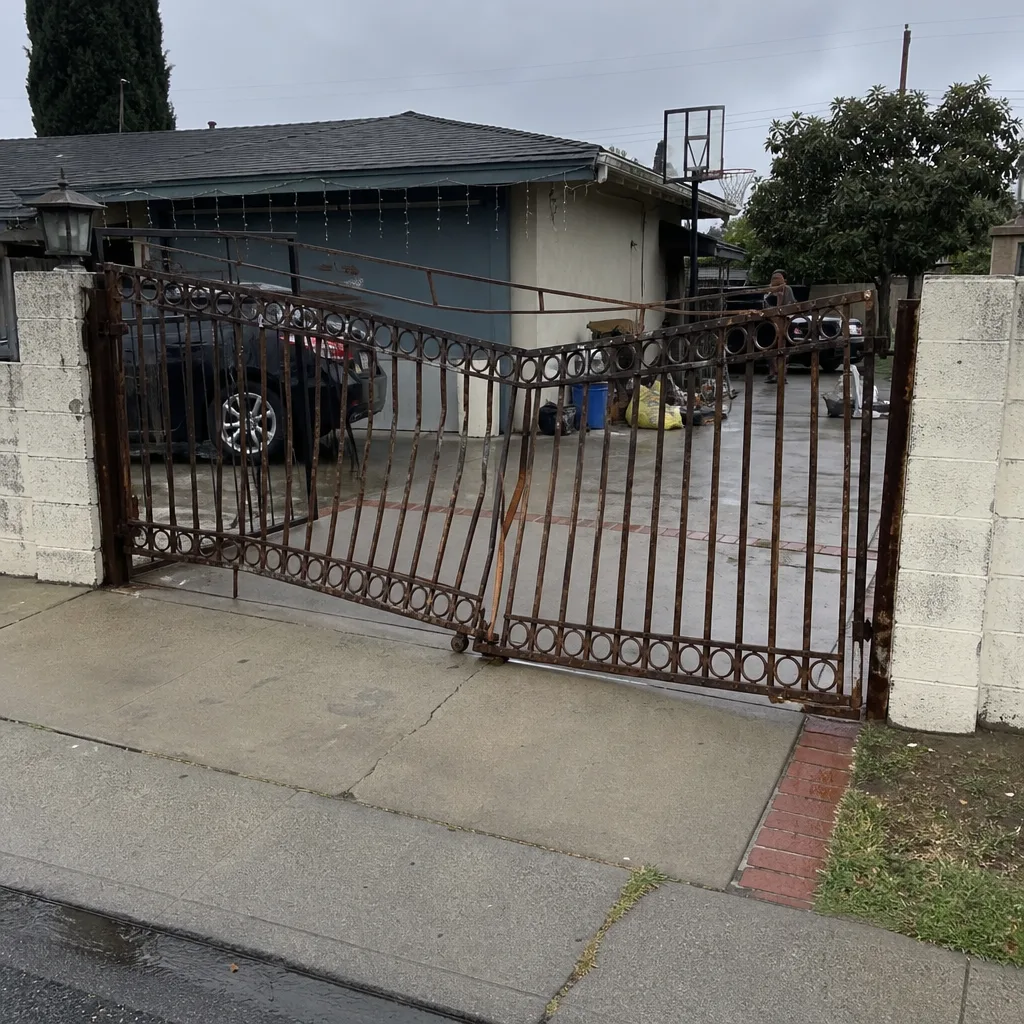 Before
 After
 Before
 After